
News Scraper Guide for 2026: Build, Buy, or Scale Smarter
Automated web scraping is essential for media monitoring, sentiment analysis, and feeding large language models. A news scraper is a specialized workflow designed to collect headlines, full-text content, and metadata from media websites. Unlike a social media scraper that handles endless scrolling and user logins, a news extraction tool focuses heavily on publisher layouts, article timestamps, and structured text exports.
This guide provides a practical framework for building, buying, or scaling your extraction pipeline.
Upgrade your infrastructure with LycheeIP
What is a news scraper?
A news scraper systematically collects publication data and transforms it into a structured format for monitoring or downstream analysis.
In practice, scraping teams build these tools to handle three distinct jobs. A discovery scraper monitors aggregated surfaces to find breaking URLs and metadata. A full-text scraper visits individual publisher pages to extract the actual article body. An API-based pipeline bypasses HTML parsing entirely by reading structured feeds when available. Security and fraud operations use these pipelines to track brand mentions, while fintech operations use them to power algorithmic trading signals.
What data to scrape from news articles?
Most data engineers should collect a compact schema first and only add enrichment fields when a clear use case demands it.
A stable starting point includes the title, source, publication date, a short snippet, and the original article URL. If your RAG news pipeline requires deeper context, you can expand your schema to include author names, category tags, header image URLs, and the full normalized article text.
Quick field checklist:
- Must-have: Title, publisher source, published timestamp, URL.
- Should-have: Text snippet, query topic, language, region, fetch timestamp.
- Nice-to-have: Author, meta tags, full text, content hash for deduplication.
How does a news scraper work end to end?
A reliable news scraper separates the discovery phase from full-page extraction to reduce unnecessary server load and formatting errors.
Using a split pipeline ensures that you only spend compute resources downloading full pages when the initial metadata matches your criteria. We recommend the NEWS-SHAPE framework for end-to-end data collection:
- Narrow the source set to relevant domains.
- Establish your allowed scope and check reuse limits.
- Watch the exact HTML fields you need.
- Split discovery queries from full-article extraction.
- Store both the raw HTML response and the normalized JSON.
- Handle network retries and custom headers carefully.
- Audit your database for duplicate entries.
- Publish the final records to your vector database or data warehouse.
- Evaluate your pipeline for freshness gaps and dropped fields.
Which build path fits your data engineering team best?
The ideal architecture depends entirely on your required extraction speed, maintenance capacity, and budget.
Teams generally choose between writing custom scripts, paying for managed services, or using artificial intelligence to handle messy HTML structures.
Build vs Buy vs AI Extraction
| Approach | Best For | Strengths | Tradeoffs |
| DIY Python Script | Small scraping teams wanting full control. | No vendor lock-in, highly flexible schema. | High maintenance, prone to breaking on layout changes. |
| News Scraper API | Multi-account agencies scaling quickly. | Immediate structured output, built-in anti-bot bypass. | Recurring subscription costs, less customization. |
| AI News Scraper | Handling inconsistent publisher layouts. | Excellent at semantic extraction and normalizing messy data. | High latency, requires strict validation to prevent hallucinations. |
How do you build a python news scraper?
Start with a narrow target site, use simple HTTP libraries for fetching, and export the structured data immediately.
For a basic python news scraper, standard libraries like requests paired with BeautifulSoup are sufficient for static pages. Define your required fields first. Fetch the page using basic HTTP GET requests. Parse the stable HTML elements, such as standard <h1> tags for titles. Always save the raw response locally so you can re-process the page if your parsing logic breaks later. Add logging and retry logic before scaling up to multiple domains.
How do you build a google news scraper without complications?
Use the search engine strictly as a discovery layer to gather initial metadata before fetching the original publisher URLs.
A dedicated google news scraper workflow should avoid deep extraction on the search results page itself. Search engine layouts change constantly. Instead, query the news tab for a specific topic, extract the headline, source, and publisher link, and store that metadata. Once you filter out irrelevant topics, your pipeline can visit the actual publisher pages to extract the full text.
Upgrade your infrastructure with LycheeIP
How do you export scraped news articles to JSON or CSV?
Use JSON for nested data pipelines and CSV for flat spreadsheet analysis.
After your news scraping script parses the HTML, the output format dictates how easily downstream teams can use the information. JSON is the industry standard for AI for news scraping because it handles nested metadata, arrays of authors, and large blocks of full text without breaking delimiters. CSV is better suited for quick quality assurance checks or handing off data to analysts using spreadsheet tools. Always include a unique content hash in your export to make deduplication easier.
Why do automated web scraping pipelines fail in production?
Extraction workflows usually break because teams ignore anti-bot defenses, layout changes, and proper deduplication practices.
Modern web scraping tools will fail if the underlying target updates its site structure or deploys aggressive traffic filtering.
Common Pipeline Failures and Fixes
| Symptom | Likely Cause | Practical Fix |
| Zero or very few results | Discovery query is too narrow or targeting the wrong region. | Broaden the search parameters and test alternative language settings. |
| Encountering CAPTCHAs | Poor IP reputation or aggressive concurrency rates. | Slow down request volume, rotate IPs, and use HTTP instead of browser automation. |
| Missing data fields | Layout drift or brittle CSS selectors. | Implement fallback selectors and audit parsing logic regularly. |
| Duplicate article entries | Syndicated content appearing across multiple domains. | Deduplicate records using a normalized URL, source, and publish time hash. |
When do proxies for news scraping actually matter?
You need a dedicated proxy network when high concurrency, geo-targeting requirements, or IP reputation limits your success rates.
Many basic scraping scripts run fine locally. However, when multi-account agencies or fintech ops teams need to monitor hundreds of sources globally, standard datacenter IPs get blocked quickly. The common market approach is to use massive, shared proxy pools, which often suffer from high churn rates and tainted IP histories.
This is where integrating a developer-first data infrastructure provider like LycheeIP stabilizes your pipeline. Instead of fighting blocks with complex browser emulation, upgrading the network layer solves the root access problem.
How LycheeIP fits into a scraping pipeline:
- Stable IP reputation: Uses 100% exclusive global IPs with a strict cooling period of more than six months before use.
- Global geo-targeting: Access to dynamic residential proxies covering 200+ countries and regions.
- High performance: Unlimited concurrency for dynamic residential pools and high throughput (1Gbps+) for static datacenter proxies.
- Developer-friendly management: Monitor usage statistics in near real-time via a simple web dashboard and API.
- Transparent scaling: Clear pricing models, such as billing dynamic residential traffic at $5.00/GB.
When should you avoid using an AI news scraper?
You should pause automated collection when a licensed RSS feed is available or when publisher rights explicitly restrict data mining.
Web scraping is not always the correct technical path. Always evaluate publisher rights and AI scraping policies before deploying infrastructure.
Assumptions and limitations to consider:
- This guide provides architectural advice, not legal counsel.
- A robots.txt file indicates crawler preferences; it is not a definitive legal authorization system.
- Many publishers now implement explicit AI crawler controls, including allow-lists and paywalls.
- Extracting and storing full-text articles carries higher compliance risks than simply scraping metadata and headlines.
Upgrade your infrastructure with LycheeIP
Frequently Asked Questions:
1. What is a news scraper?
A news scraper is an automated tool or script that extracts headlines, metadata, and full article text from media websites. Data engineering teams use them to convert raw web pages into structured data for monitoring and analysis.
2. What data can a news scraper collect?
Depending on the pipeline, you can extract article titles, publication timestamps, author names, text snippets, canonical URLs, and full body text.
3. How do I build a news scraper in Python?
Start by identifying your target source and defining your schema. Use Python libraries to send HTTP requests, parse the resulting HTML for specific tags, and export the final data to a JSON file.
4. How do I use AI for news scraping?
AI is best used as a parsing and normalization layer. After fetching the raw HTML using standard HTTP requests, you can pass the messy text to an AI model to extract specific entities or summarize the content into a clean schema.
5. Do I need proxies for news scraping?
You need proxies when your script requires high request volumes, needs to bypass IP-based rate limits, or must view region-specific news coverage that is hidden from your local server.
6. What is a RAG news pipeline?
A Retrieval-Augmented Generation (RAG) news pipeline feeds freshly scraped, structured news data into a large language model. This allows the AI to answer questions based on real-time current events rather than relying solely on its outdated training data.
Internal Link Suggestions
- [Link to: What Is Web Scraping and When Should You Use It]
- [Link to: Python Web Scraping Stack for Production Teams]
- [Link to: JSON vs CSV for Scraped Data Pipelines]
- [Link to: Proxy Rotation Basics for Data Collection Teams]
- [Link to: How to Choose Proxies for Large-Scale Scraping]
External Source Suggestions
- Google for Developers: robots.txt interpretation - https://developers.google.com/search/docs/crawling-indexing/robots/intro
- RFC 9309 (Robots Exclusion Protocol) - https://www.rfc-editor.org/rfc/rfc9309.html
- U.S. Copyright Office AI Initiative - https://www.copyright.gov/ai/
- Cloudflare Pay Per Crawl / AI Crawl Control - https://blog.cloudflare.com/ai-bots/

Recommended Articles
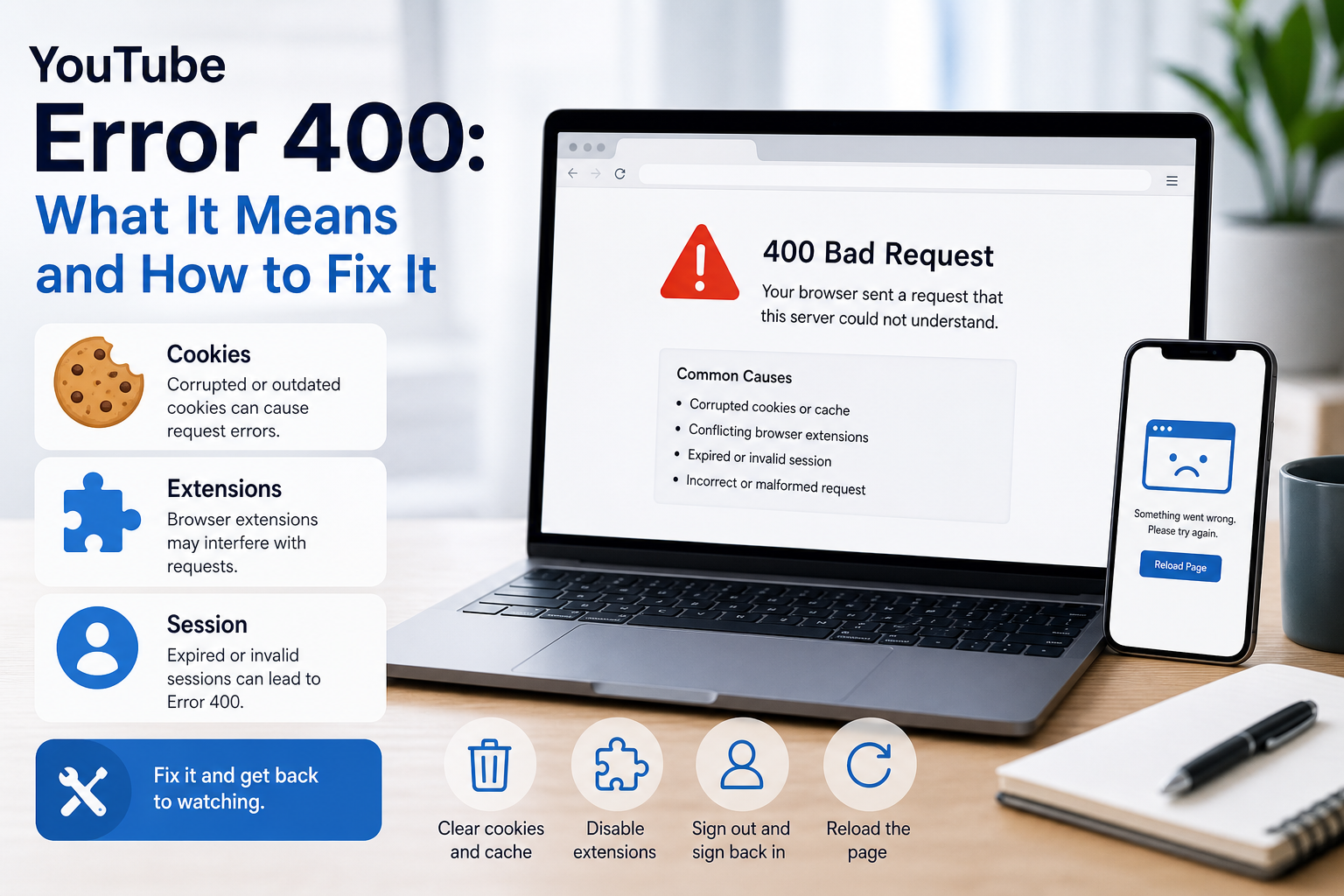
YouTube Error 400: What It Means and How to Fix It
In HTTP terminology, a 400 Bad Request is a client-error response. MDN explains that servers commonly return 400 when they consider the request malformed, incorrectly framed, or deceptively routed. The important troubleshooting clue is that repeating the exact same request without changing anything is expected to fail again.
View Details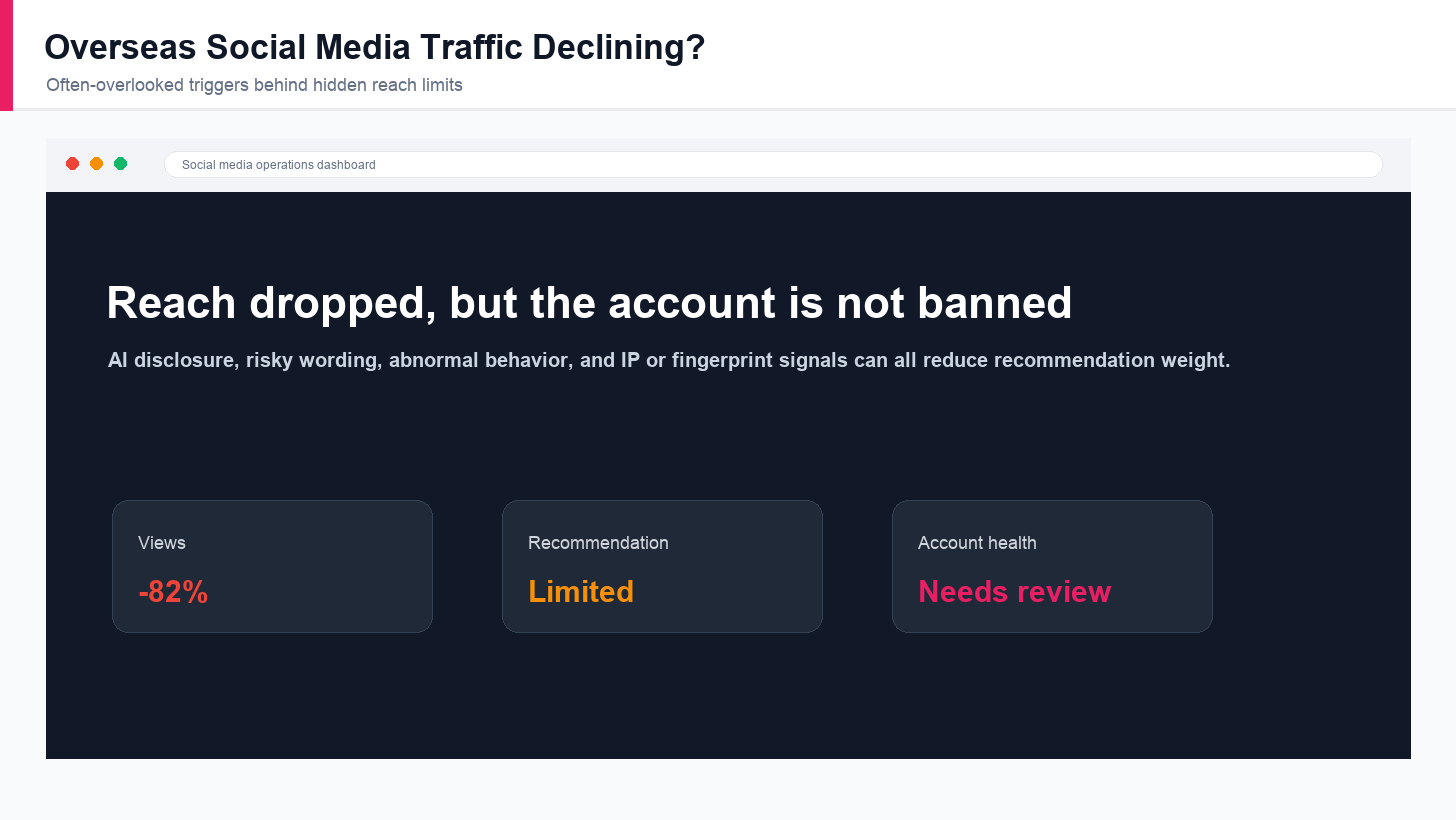
Overseas Social Media Traffic Declining? These Reach-Limiting Triggers Are Often Overlooked
A practical guide to overlooked overseas social media reach drops, covering AI content disclosure, risky wording, abnormal account behavior, hidden reach-limiting signals, and account environment checks.
View Details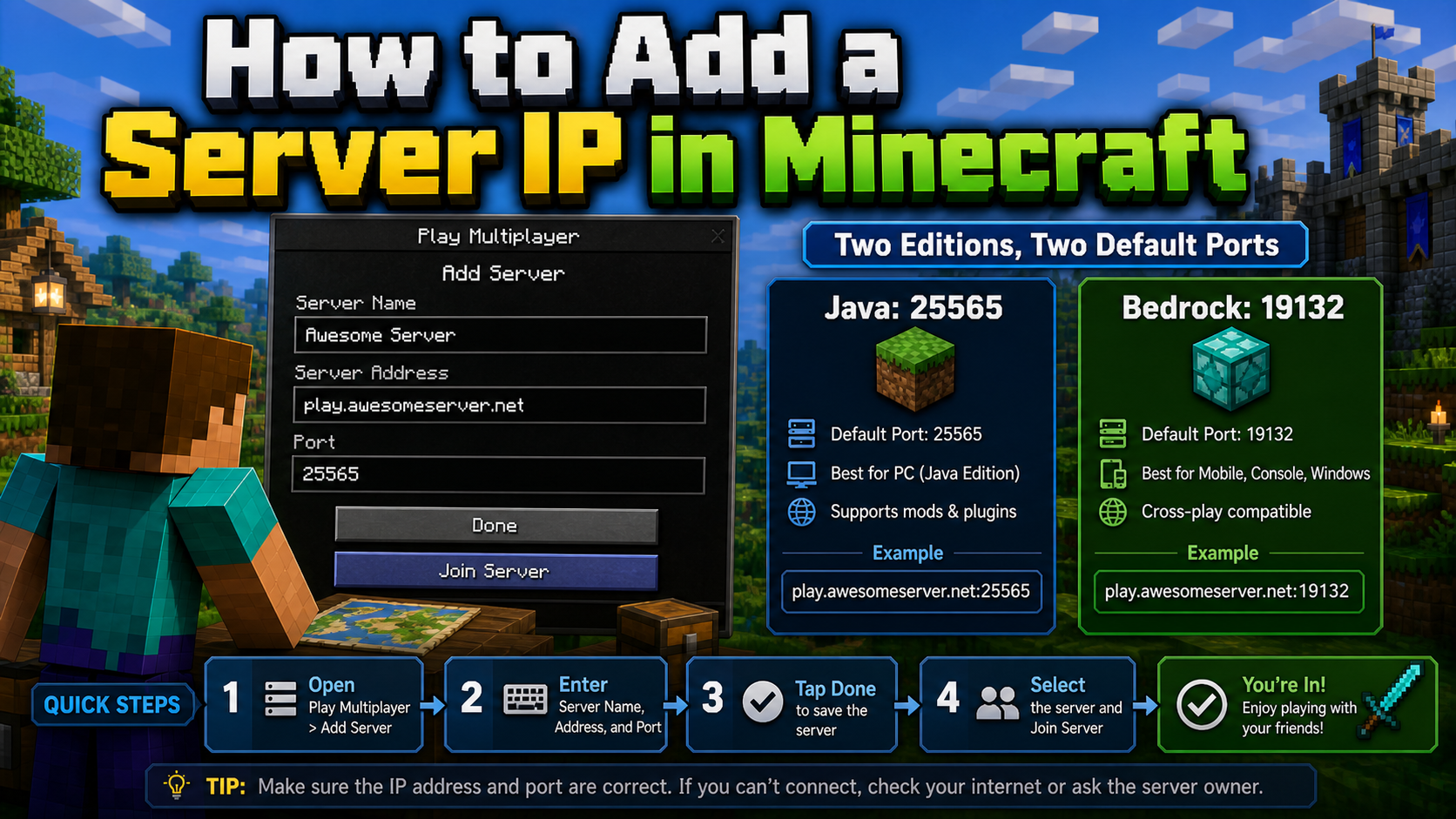
How to Add a Server IP in Minecraft Step by Step
Learn exactly where to enter a Minecraft server IP in Java, Bedrock, and Pocket Edition, plus how to fix common connection errors, ports, and edition mismatches.
View Details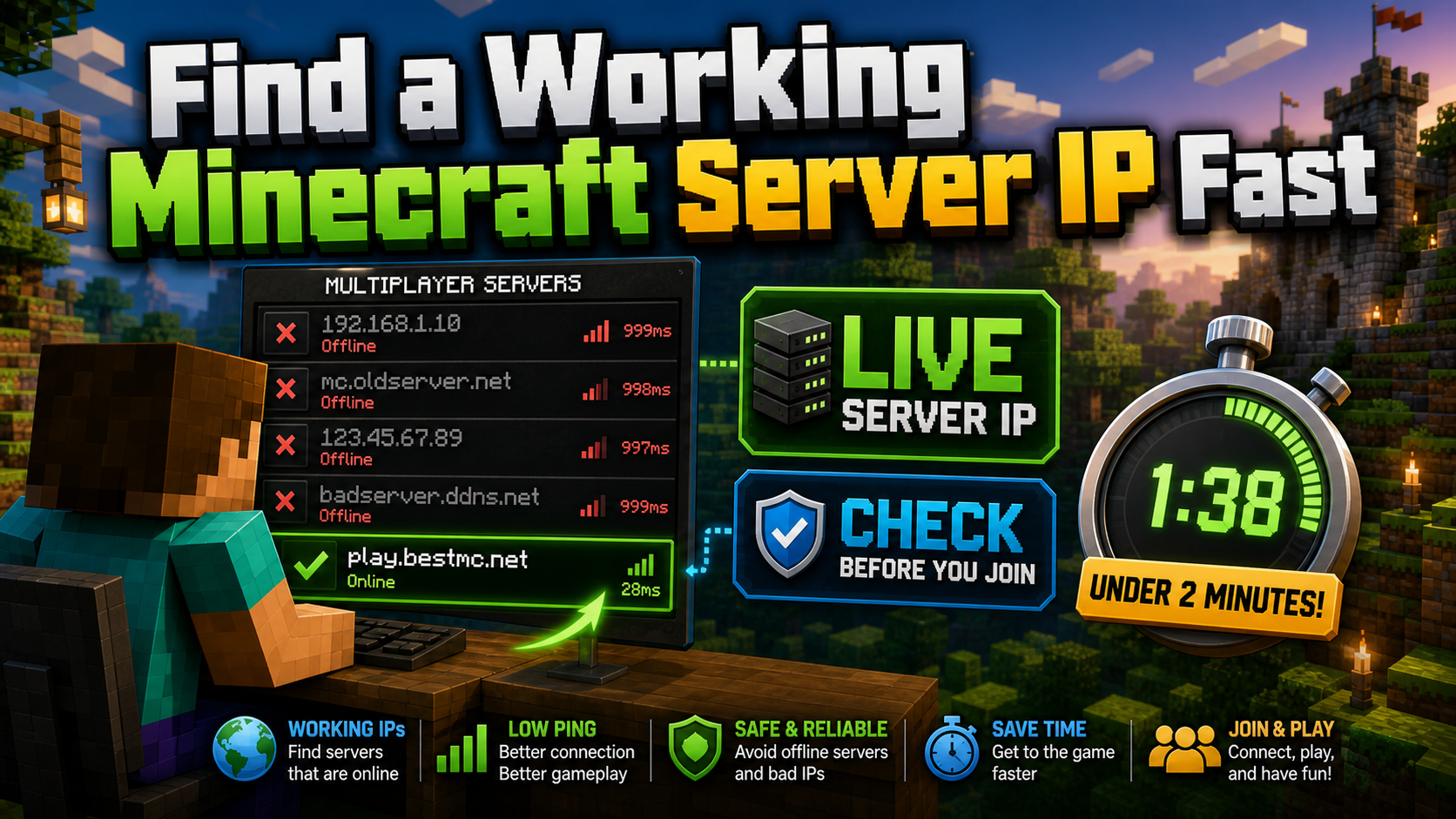
How to Find a Working Minecraft Server IP Fast
Stop wasting time on dead Minecraft server IPs. Learn how to verify live servers quickly, read status icons, check ports, and source updated server addresses.
View Details
Best 24/7 Online Minecraft Server IPs — No Downtime
Find reliable 24/7 Minecraft server IPs for Java and Bedrock, plus uptime checks, port basics, ping guidance, crossplay notes, and network stability tips.
View Details